Observation Notes

These entries capture what we actually saw in the field: sky conditions, timing, and the details that stood out at the eyepiece. Read them as practical records and reflective learning notes0 each post is meant to help you prepare for your next night out.

Observation Log Highlights

Field notes from recent night sessions

A concise look at how members document conditions, methods, and sky behavior with calm, repeatable observation practice.

September 24, 2026 · Lead Entry

Saturn at steady seeing: ring contrast and moon sequencing

From 21:10–22:05, the team logged unusually stable air over the western ridge. At 180×, Cassini separation held cleanly across most of the ansae, while Titan, Rhea, and Dione remained consistently detectable with short averted-vision checks.

Instrument: 200mm Newtonian · Sky quality: Bortle 5 · Transparency: moderate-high
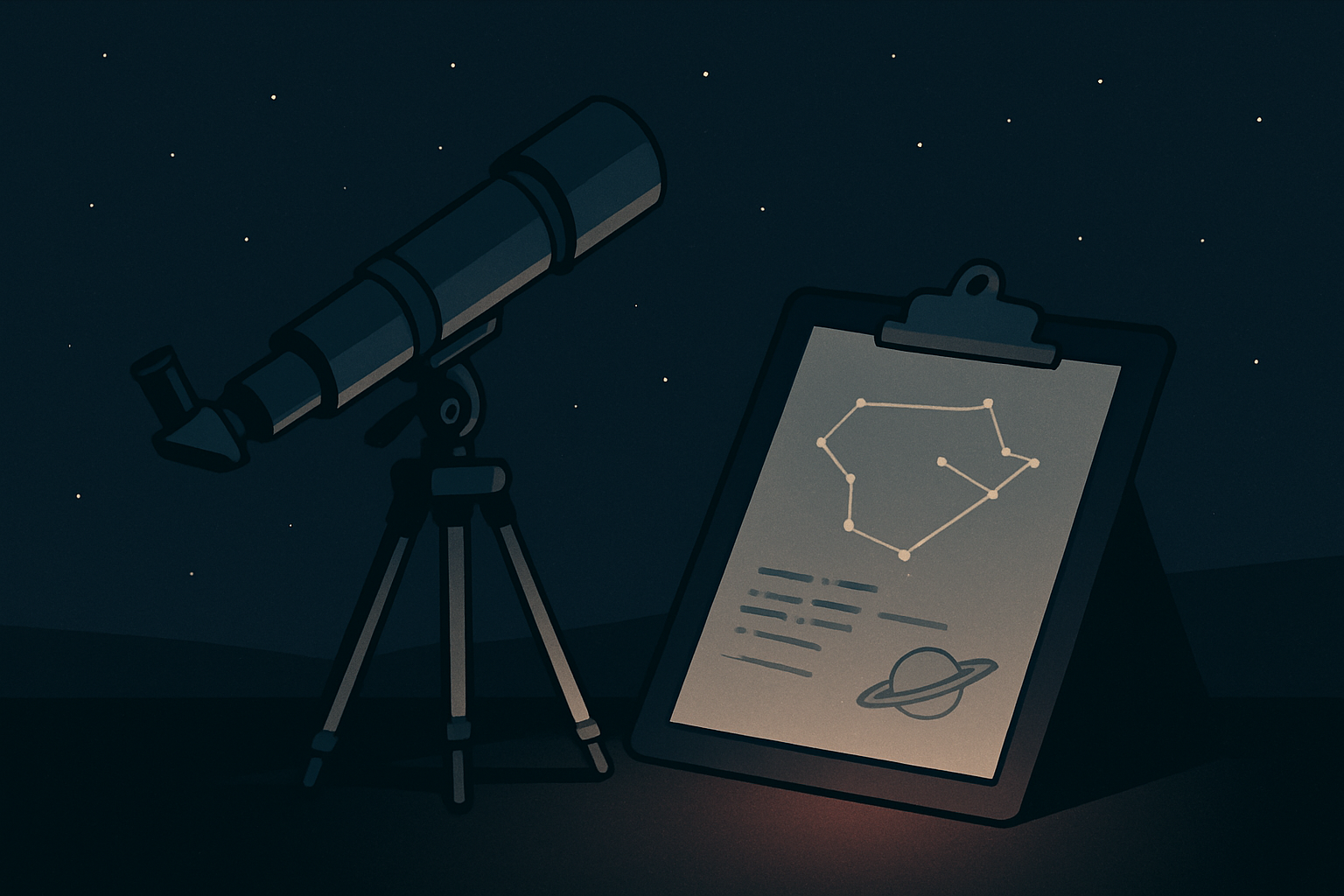
Calm astronomy observation chart with telescope setup notes under a night sky
Session sketch and timing overlay for ring-angle comparison.

September 18, 2026

Cygnus sweep: double-star color contrast

Short refractor pass recorded reliable color separation in Albireo and nearby pairs before thin cirrus reduced magnitude depth.

September 12, 2026

Lunar terminator log: crater shadow timing

Members cross-checked shadow lengths near Copernicus at 15-minute intervals to compare visual estimates with atlas predictions.

September 04, 2026

Perseid follow-up: late-hour radiant drift

A brief after-midnight check confirmed lower counts but improved trail clarity, useful for comparing peak-night and post-peak behavior.